
Hell Boy's winch didn't fail on this climb. Its fuel line did. Rick fixed it with parts stripped off one of the truck's own hydraulic winches. That's the honest version of what happened, not the more dramatic one. A steep grade tilted the truck hard enough that the fuel pickup tube in the tank came up dry. The fix on hand? Hydraulic hardware, borrowed from a completely different system. Stick with this one. That parts drawer explains more about how a hydraulic winch actually works than any spec sheet will. Why Hell Boy runs five of them, and why the hose and fittings on one deserve just as much respect as the winch itself.
- Climbing a steep grade at Sand Hollow, Utah, Rick's 76,000-pound military truck leans hard enough that the fuel pickup tube can't reach fuel already in the tank.
- His fix: rob a hydraulic line, a fitting, and a hose clamp off one of the truck's own hydraulic winches to rig a temporary fuel feed running off a jug.
- The winch never failed. The parts just happened to be hydraulic hardware, borrowed for a fuel problem, not a winch repair.
- A hydraulic winch runs off the engine's own hydraulic pump instead of the electrical system, which is why Hell Boy can run several of them without the heat problems electric winches run into under heavy use.
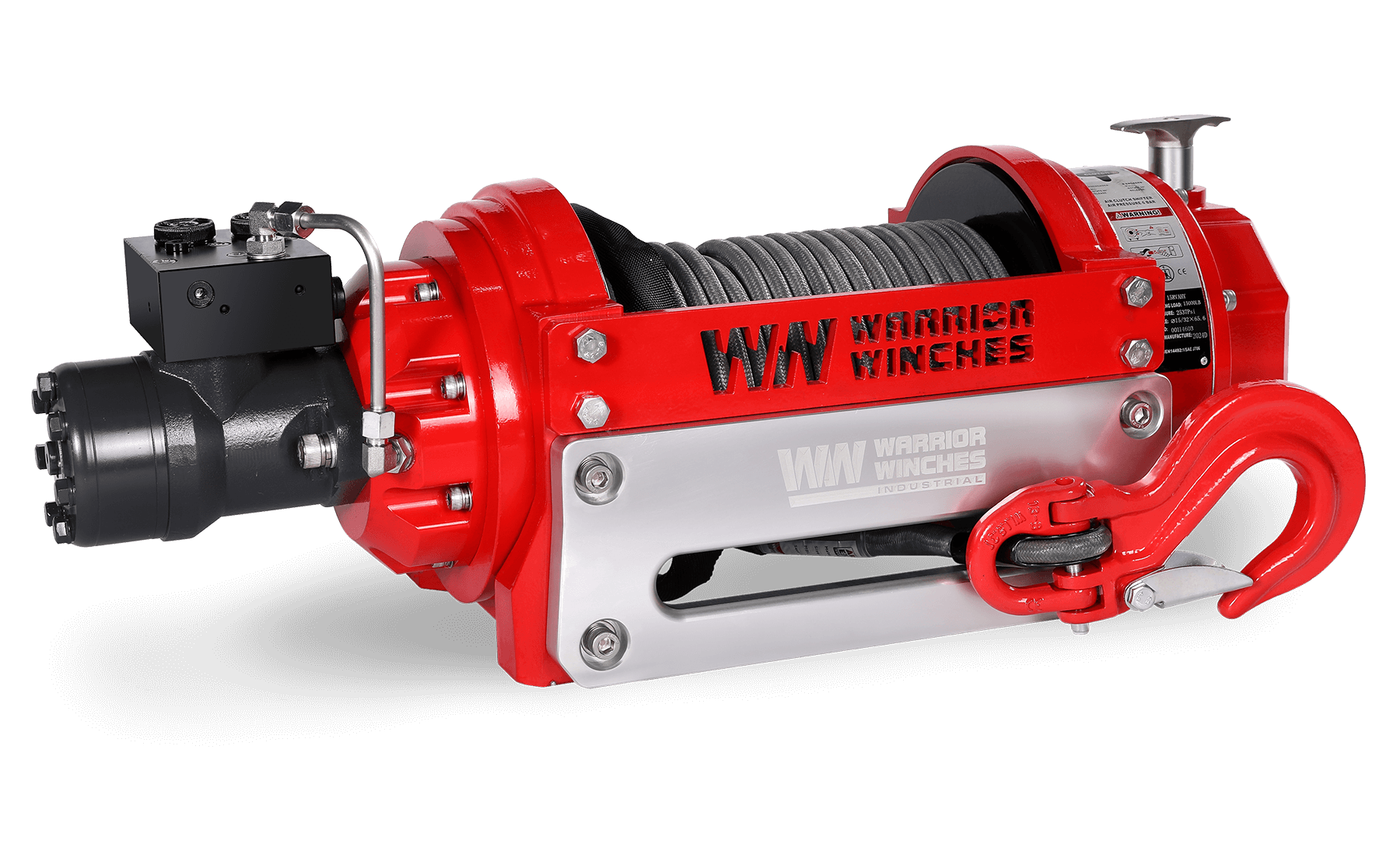
- Murphy's sells two hydraulic winches from that same family: the RV10 at 10,000 lb and the RV15 at 15,000 lb.
- Any hydraulic hose or fitting swap, trailside or otherwise, has to respect the system's rated pressure. OSHA's own standard says so directly.
1. Assessing the damage at the top of a climb
Most creators would cut around this part. Rick doesn't. It's not a flattering way to open, but he does it anyway, totaling up what a hard week actually cost the fleet. "We're going to show you a side of Sand Hollow that you've never seen before," he tells the camera, "but first, we have got to assess the damage that we did to all of our rigs at the 2026 Matt's Off Road Games, starting with HB." HB is Hell Boy. And the climb that follows? Not a clean one.
First problem: the truck runs out of diesel partway up the trail. "We ran HB out of diesel fuel right in the middle of the shoot. Murphy's Law," Rick says. The crew heads back down for a fuel pump and a fresh supply. That part gets fixed fast. The next one doesn't.
2. Fuel that couldn't find the pump
Tank topped off, Rick expects to keep climbing. He doesn't get far. Turns out the grade itself is the real problem here, not the fuel level. Notice what he's not saying: not "we're low on fuel." There's plenty in the tank. Gravity's just not cooperating.
"Problem we're running into here, folks. Hellboy is leaning to the driver side and the passenger side so hard that all the fuel is ran to this corner right here and my pickup tube is way up in that corner. So, it's sucking air and it's got us in a real bind."Wrecker Rick, mid-climb
The truck's tilted far enough on the grade that the pickup tube can't reach the fuel that's already there. That's a geometry problem, not a fuel problem, and it needs a fix that doesn't mean driving back down a third time.
3. The parts drawer that saved the climb
Rick's fix is straightforward once you hear it. It's the whole reason this article exists.
"I've robbed a hydraulic line off of one of my winches and a fitting and a hose clamp off of something else because I don't need it right now. I just need my truck to back up on low ground so it'll run."Wrecker Rick, rigging the fix
So he runs the borrowed line into a jug of diesel instead of the tank, the kind of fix you'd only think of if you already know what's plumbed where. Engine's fed off the jug, and he drives down to lower, flatter ground where the tank feeds normally again. "Then I'll hook it back to the tank," he says, once the truck's off the grade. It works, and it's a nice bit of field improvisation for something rigged out of spare hose. Somebody off camera asks Rick if he actually wrenches on his own rigs, or if that's just for the show.
"Yeah, it's all for show, folks." "Look whose hands are dirty."Wrecker Rick and crew, mid-repair
Let's be plain about it: nothing here repaired a hydraulic winch, and no winch failed. Hell Boy's winches were fine the entire time. What Rick actually did was raid a hydraulic winch's own hardware: a length of hose, a fitting, a hose clamp. That's just what a truck built around five hydraulic winches happens to have lying around when something else needs a hose. Which is as good a reason as any to talk about what these winches actually are.
4. What a hydraulic winch actually is
A hydraulic winch doesn't run on electricity at all. Slow down on that part if you've only ever run the electric kind: the truck's engine turns a hydraulic pump. That pump pressurizes fluid, and the fluid travels through hose to a hydraulic motor mounted on the winch itself. That motor is what actually turns the gear train and spools the drum. An electric winch skips all of that. It pulls its power straight from the truck's battery and alternator instead, and you'll never see a drop of hydraulic fluid near it.
The trade-off runs both ways. A hydraulic winch needs the engine running to work at all. An electric winch can pull with the engine off, which is a real advantage in the right situation. So why do heavy wreckers still lean hydraulic? Because it holds up to sustained, heavy pulling far better. Electric winches start running into heat problems the longer and harder you work them, nice as that engine-off trick is. The duty cycle's built for exactly the kind of punishment a truck like Hell Boy sees.
Murphy's own product page for the RV Series puts a number on part of that case: the winches are built to the SAE J-706 standard, with a 10:1 drum-to-rope ratio and a hydraulic full-load holding brake that keeps the line from creeping under a static load. That last part's a hydraulic-only advantage. A holding brake like that lets a winch sit locked under full tension without the motor doing any of the holding.
5. Why the hose and fittings matter as much as the winch
Rick's trailside fix is a good story precisely because it leans on hardware most people never think about: the hose, the fitting, the hose clamp. Those parts are rated components. Not generic tubing. Treat them that way. That's the difference between a fix that holds and one that doesn't.
OSHA's standard on hydraulic power tools is direct about this: "The manufacturer's safe operating pressures for hoses, valves, pipes, filters, and other fittings shall not be exceeded."[1] A hose or fitting rated for one system's pressure isn't automatically safe on another. OSHA's own maintenance guidance adds the inspection side of that same coin: hydraulic hoses should get "weekly inspection... for signs of damage and immediate repair or replacement of damaged hoses," checked against the relevant ANSI and SAE standards for selection, installation, and maintenance.[2] A separate OSHA bulletin on hydraulic system inspection is just as specific about what "damaged" looks like: "any evidence of hydraulic oil leakage at the surface of a flexible hose or its junction with the metal and couplings" or "evidence of excessive abrasion or scrubbing on the outer surface of a hose, rigid tube, or hydraulic fitting" both mean it gets replaced, not patched.[3]
None of that is a knock on what Rick did. A trailside fix to get a truck off a bad grade is exactly what that kind of fix is for, and it's a smart one at that. The point is what comes after. A jug-fed line that gets you down the mountain still needs matching back to the right rated hose and fitting. Do that before you trust the truck on the next climb. And the winch that donated the parts needs a look before it goes back to work too.
6. Sizing a hydraulic winch for real work
Hell Boy runs five hydraulic winches for a reason. Heavy recovery work outgrows a single winch fast, and hydraulic is the class built to run hard, all day, without cooking itself. Murphy's carries two sizes from that same RV Series line Rick's own fleet uses.

Built to the SAE J-706 standard, 10:1 drum-to-rope ratio, hydraulic full-load holding brake, synthetic rope. Part of the same RV Series that runs on Hell Boy.

Same RV Series build and SAE J-706 rating as the RV15, at a lighter capacity and a lower price for rigs that don't need the full 15,000 lb.
The bigger of the two, for the heaviest recovery work a hydraulic system is built to shrug off.
| RV10 | RV15 | |
|---|---|---|
| Rated capacity | 10,000 lb (4.5 ton) | 15,000 lb (6.8 ton) |
| Price | $2,499.99 | $3,099.99 |
| Standard | SAE J-706 | SAE J-706 |
| Drum-to-rope ratio | 10:1 | 10:1 |
| Best for | Heavy work that doesn't need the full 15,000 lb | The heaviest recovery jobs a hydraulic system is built for |
7. Safety: hydraulic lines under pressure
A hydraulic line under working pressure is not the same thing as a garden hose, and it doesn't fail the same way either. The rules below come straight from OSHA, not house opinion.
Whether you're fixing a winch, a fuel system, or anything else running hydraulic hose, these apply.
- Never exceed the manufacturer's rated pressure for a hose, fitting, or line. OSHA's standard on hydraulic power tools is explicit: "The manufacturer's safe operating pressures for hoses, valves, pipes, filters, and other fittings shall not be exceeded."[1] A part that's rated for one system isn't automatically safe borrowed onto another.
- Inspect hydraulic hoses on a real schedule, not just when something looks wrong. OSHA's own hydraulic-systems maintenance guidance calls for weekly inspection, with immediate repair or replacement of anything damaged, checked against the applicable ANSI and SAE hose standards.[2]
- Any sign of leakage at a hose or fitting junction, or abrasion on the hose itself, means replace it, not patch it. Per OSHA's hydraulic systems bulletin, both "evidence of hydraulic oil leakage at the surface of a flexible hose or its junction with the metal and couplings" and "evidence of excessive abrasion or scrubbing on the outer surface of a hose, rigid tube, or hydraulic fitting" are retirement criteria, not repair jobs.[3]
- A pressurized hydraulic line that fails can break skin, not just spray fluid. Treat any leak on a working system as a reason to shut it down, not a reason to keep pushing through the job.
- A trailside fix gets you moving. It isn't a permanent repair. Once you're off the mountain, match the replacement hose, fitting, and clamp to the system's actual rating before you trust it again.
Sources: [1] OSHA, 29 CFR 1926.302(d)(2), Hydraulic Power Tools · [2] OSHA, Hazard Information Bulletin, Hydraulic Systems Preventive Maintenance · [3] OSHA, Hazard Information Bulletin, Hydraulic Systems Modifications
8. Bottom line
The headline moment here is a truck leaning hard enough on a grade to starve its own fuel system. Not a winch breaking down. Rick's fix borrowed hydraulic parts because that's what a truck built around five hydraulic winches happens to carry. And it's as good an excuse as any to explain what those winches actually are: pump-driven, hose-fed, built for the kind of sustained heavy pulling that would cook an electric winch trying to keep up.
Sizing one for your own rig? Here's the short version: the RV10 at $2,499.99 covers serious work below 10,000 lb, and the RV15 at $3,099.99 is the one you reach for above that. Either way, the hose and fittings running to it deserve the same respect you'd give the winch itself, because that's exactly what they're a part of.
Sources
- OSHA, 29 CFR 1926.302(d)(2), Hydraulic Power Tools. "The manufacturer's safe operating pressures for hoses, valves, pipes, filters, and other fittings shall not be exceeded." osha.gov/laws-regs/regulations/standardnumber/1926/1926.302
- OSHA, Hazard Information Bulletin, "Hydraulic Systems Preventive Maintenance" (July 14, 1992). Recommends "weekly inspection of hydraulic hoses for signs of damage and immediate repair or replacement," checked against ANSI T2.24.1 and SAE J517/J1273 hose standards. osha.gov/publications/hib19920714
- OSHA, Hazard Information Bulletin, "Hydraulic Systems Modifications" (July 11, 1991). "Any evidence of hydraulic oil leakage at the surface of a flexible hose or its junction with the metal and couplings" and "evidence of excessive abrasion or scrubbing on the outer surface of a hose, rigid tube, or hydraulic fitting" are both listed as retirement criteria. osha.gov/publications/hib19910711
FAQ
No. The winch itself was fine. The problem was fuel starvation: Hell Boy leaned so hard on a steep grade that the fuel pickup tube couldn't reach the fuel in the tank. Rick borrowed a hydraulic line, a fitting, and a hose clamp off one of his winches to rig a temporary fuel feed, not to repair the winch.
The truck's engine drives a hydraulic pump, which pressurizes fluid and sends it through hose to a hydraulic motor on the winch. That motor turns the gear train and drum. It's a different power path than an electric winch, which runs straight off the truck's electrical system.
Hydraulic winches hold up to sustained, heavy-duty pulling better than electric winches, which run into heat problems the longer and harder they're worked. That's a real trade: a hydraulic winch needs the engine running to work, where an electric winch doesn't.
Not for a permanent fix. OSHA's own standard on hydraulic power tools states plainly that manufacturer-rated operating pressures for hoses, valves, pipes, and fittings must not be exceeded. A trailside swap gets you moving; the parts still need to be matched to the system before you trust it again.
The RV10 is rated for 10,000 lb (4.5 ton) and the RV15 for 15,000 lb (6.8 ton). Both are part of Murphy's RV Series, built to the SAEJ-706 standard with a 10:1 drum-to-rope ratio and a hydraulic full-load holding brake.
OSHA's own hydraulic-systems maintenance guidance calls for weekly inspection of hydraulic hoses for signs of damage, with immediate repair or replacement of anything damaged.