
A gear-driven winch and a modern electric winch do the same basic job with completely different machinery. The gap between them isn't a coat of paint, it's thirty years of design change. Rick's got a real example of the old side sitting right in his own fleet: a vintage Holmes wrecker, still running the gear-driven, steel-cable winches it rolled off the line with. What actually changed is the machine itself, which is why you'll find Murphy's selling the modern side of this comparison, not the old one.
- Rick's vintage Holmes wrecker, roughly 30 years old by his own guess, still has its original gear-driven, steel-cable winches on it.
- "Gear-driven" means the winch runs off mechanical power from the vehicle itself, not an electric motor.
- Steel cable carries real, documented hazards: broken wires can puncture hands, and a cable under load stores energy that can release with force if it fails.
- Synthetic rope stores far less of that energy. Per Yankum, Murphy's own rope supplier, it "won't snap back with deadly force like a broken steel cable."
- Murphy's does not sell a steel-cable winch of any kind, gear-driven or electric. Every winch in the store runs synthetic rope.
- Whichever era of winch you're running, the same stand-clear rules apply.
1. The old wrecker with 30-year-old winches still on it
Rick's out shopping for a trailer big enough to haul an actual tank, and he stops to walk a visitor through one of his own older trucks instead. Look at this thing. "It's a Holmes with a Kemp conversion on it," he says. "Kemp used to make conversions for 750 and 850 Holmes where they convert it to an actual boom like that." How old is it? Even Rick's not totally sure. "Probably 30 years old," he guesses. Stout old truck, whatever the number is. You can practically see the decades on it.
"Same as the Zachlift on the 10 by 10, just a lot older. Little piece of history for y'all. Still got the old gear-driven winches on it. It just has a boom setup."Wrecker Rick, describing the vintage truck, "I Thought I Was Buying a Military Tank... I Was Wrong"
2. What "gear-driven" actually means
A gear-driven winch has no electric motor at all. Instead it runs on mechanical power taken straight from the truck through a gear train, the same way this vintage Holmes still does today. Here's Rick's own comparison, and it nails it: same underlying idea as the Zachlift underlift on his 10x10 HEMTT, just an older, simpler version of it.
None of that makes it broken, either, so don't hear this as a knock on it. Gear-driven winches did real recovery work for decades, before 12-volt electric winches became the standard. What actually changed deserves a closer look, because it's not just that electric got more popular. The line running through the winch changed too.
3. Why the industry moved to electric, synthetic rope
Two things changed on a modern winch: the motor, and the rope. An electric winch runs off a vehicle's 12-volt system instead of a mechanical gear train. That's simpler for you to wire in, and you can control it from right inside the cab. Synthetic rope's replaced steel cable on most of what the recovery industry runs today, and not just for convenience. There's a real safety reason behind it, and it's a pretty stark one.
4. Steel cable's real hazards
Steel cable is wire rope: dozens of individual strands wound together, and OSHA's own guidance on wire rope slings doesn't soften the everyday hazard you're dealing with. Don't run your bare hand over it to check it. "Do not inspect a sling by passing bare hands over the wire rope body. Broken wires, if present, may puncture the hands."[1] Kinking. Crushing. Bird caging, where the strands separate and belly outward. All three pull a wire rope out of service immediately, no exceptions.[1] None of that is unique to a 30-year-old winch, either. It's true of steel cable under load, old or new, gear-driven or electric.
5. What synthetic rope changes
Yankum, the rope supplier behind Murphy's own hitch-mounted recovery points, makes the safety case plainly, right on its own site. "Synthetic winch line made from HMPE (High Modulus Polyethylene) is lighter, safer, and easier to handle, and it won't snap back with deadly force like a broken steel cable."[2]
"Synthetic winch line made from HMPE (High Modulus Polyethylene) is lighter, safer, and easier to handle, and it won't snap back with deadly force like a broken steel cable."Yankum Ropes, "How to Replace Your Steel Winch Cable With Synthetic HMPE Line"
That's the real difference, right there. A loaded steel cable stores energy the way a stretched spring does. Break it, and it can whip back toward whoever's standing nearby. That's wild when you actually stop and think about it. Synthetic rope doesn't behave that way. It's the opposite, really, and if it lets go, it tends to just fall instead of recoiling.
6. Choosing a modern winch
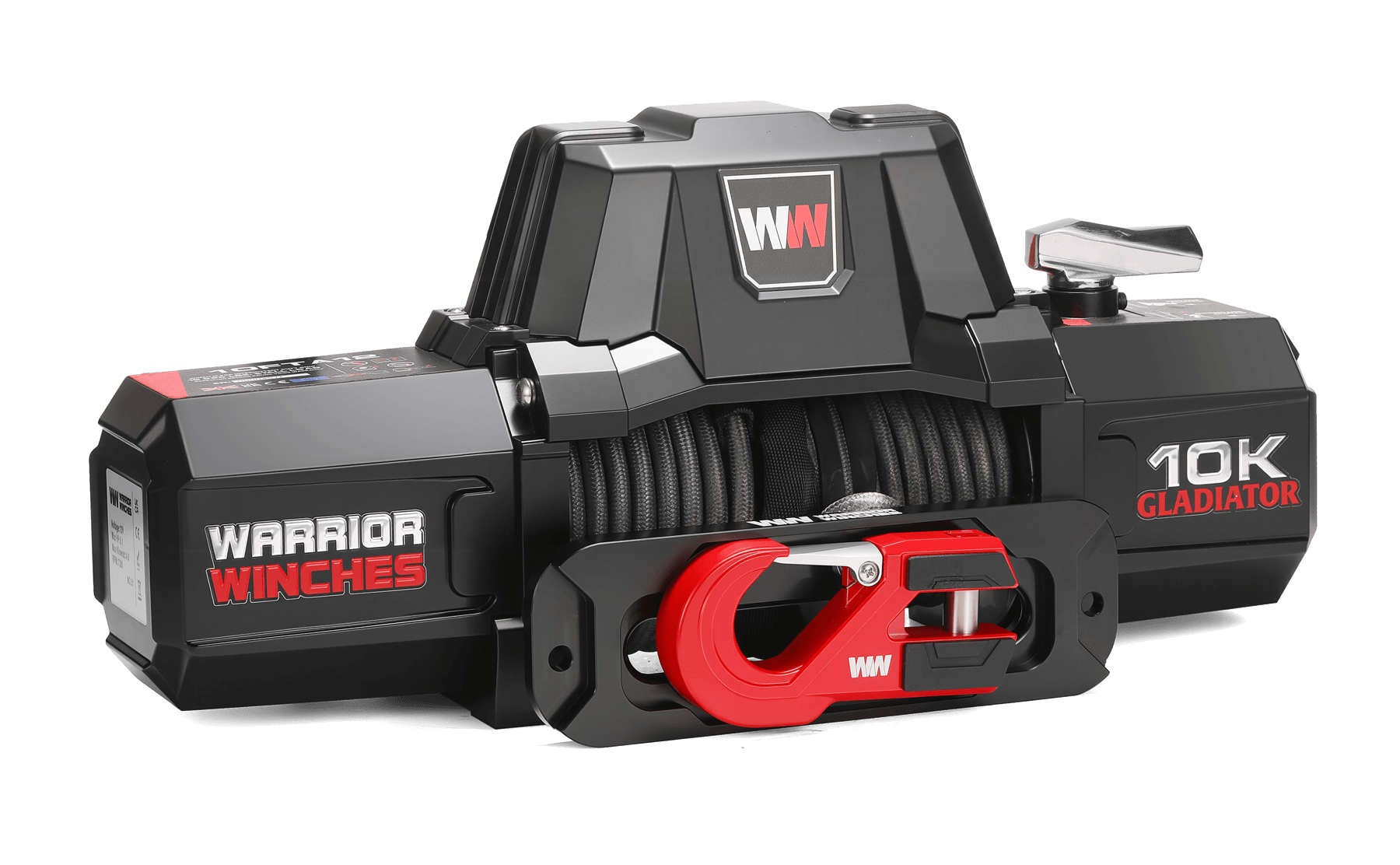
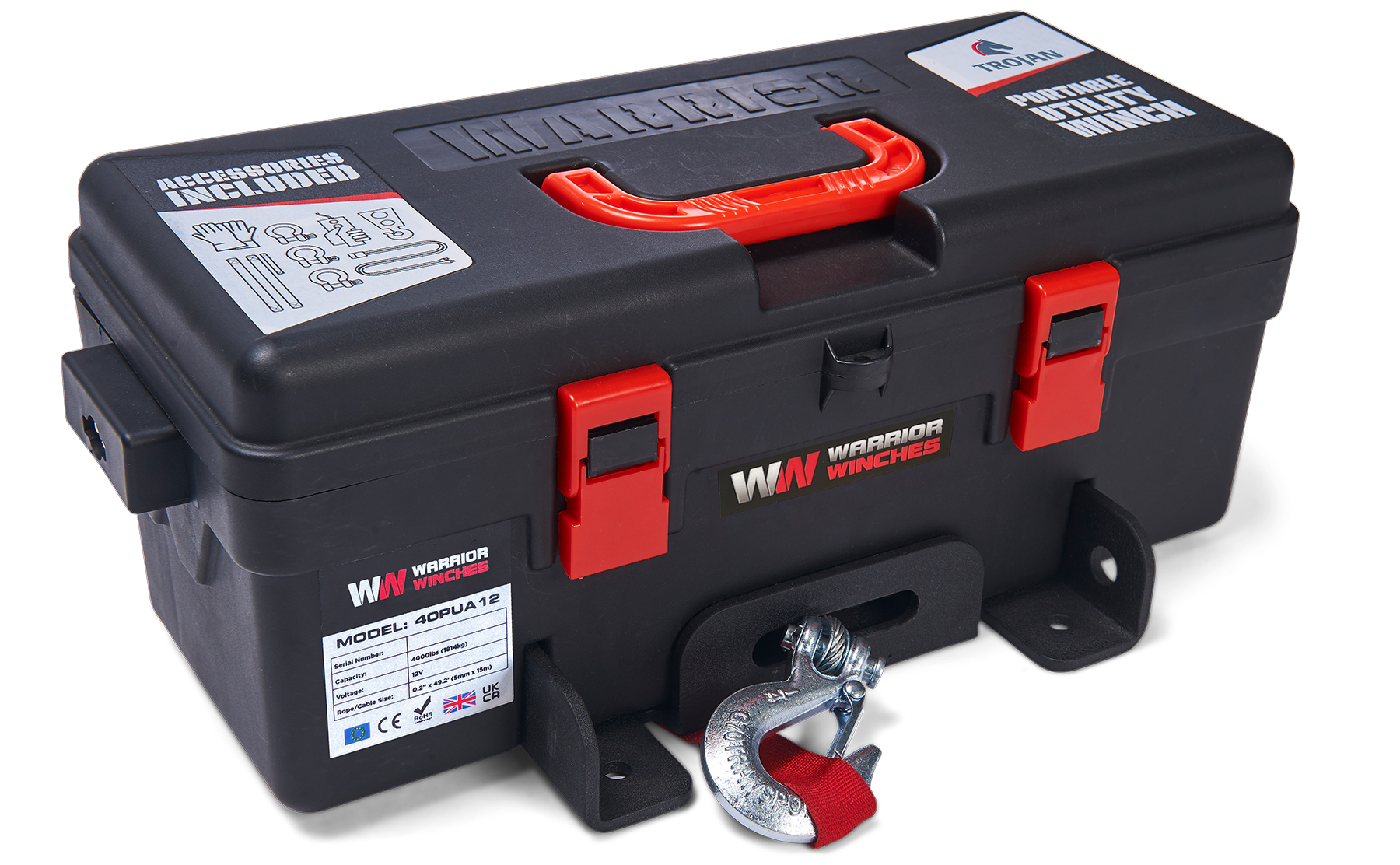
Murphy's doesn't sell a steel-cable winch. Gear-driven or otherwise, doesn't matter, they don't carry one. What they do sell is the modern side of this whole comparison, 12-volt electric winches running synthetic rope, sized anywhere from a lightweight utility trailer up to a full-size truck you're driving right now.
| Rick's Vintage Holmes Winch | Modern Murphy's Winch | |
|---|---|---|
| Power source | Gear-driven off the vehicle | 12-volt electric motor |
| Line | Steel cable | Synthetic rope (HMPE) |
| Age of this example | Roughly 30 years, per Rick | Current production |
| If the line fails under load | Stores energy, can recoil with force[2] | Stores far less energy, tends to drop[2] |
| Hand hazard on inspection | Broken wires can puncture skin[1] | No wire strands to develop that hazard |
| Sold at Murphy's today | Not offered. Murphy's does not stock a steel-cable winch. | Gladiator V2 and Trojan lines |

12-volt electric, synthetic rope, 10,000 lb rated line pull. The default pick for a truck or SUV replacing an old mechanical setup.

No permanent mount needed. An all-in-one kit for lighter trailers, UTVs, and jobs a truck-mounted winch can't reach.
10,000 lb rated line pull, 12v electric, synthetic rope. The modern replacement for a gear-driven, steel-cable setup like Rick's vintage truck.
7. Safety: old or new, respect the line
Whichever era of winch you're running, the same core rules apply to you. A couple more are specific to steel cable.
These aren't suggestions. Each one comes from OSHA's own wire rope guidance or standard winching-safety practice, not house opinion.
- Never inspect wire rope by running a bare hand along it. Broken wires can puncture skin without warning.[1]
- Retire a steel cable that shows kinking, crushing, or bird caging. Any of those means the rope's structure is compromised, immediately, not eventually.[1]
- Never stand in line with, or next to, a cable or rope under tension. That's true for steel cable and synthetic rope alike.[1]
- Stand clear of a loaded line, 1.5 to 2 times its length back. A 50-foot line means at least 75 feet of clearance.[3]
- A failed steel cable can recoil with force. Synthetic rope generally doesn't. Treat every loaded line, of either material, as dangerous until it's slack.[2]
Sources: [1] OSHA, Guidance on Safe Sling Use, Wire Rope Slings · [2] Yankum Ropes · [3] offroad-ed.com, Taking Precautions When Using a Winch
8. The bottom line
Rick's vintage Holmes wrecker is a genuine piece of history, still running on the same basic idea, gear-driven power and steel cable, that recovery trucks leaned on for decades. Murphy's builds and sells the other side of that history today: electric motors, synthetic rope. Both eras did real work. That's just true, and it's the honest part. Only one of them is actually for sale here, and now you know why.
Sources
- OSHA, "Guidance on Safe Sling Use, Wire Rope Slings." "Do not inspect a sling by passing bare hands over the wire rope body. Broken wires, if present, may puncture the hands." Kinking, crushing, bird caging, and other structural damage listed as removal criteria. "Ensure that personnel never stand in line with or next to the legs of a sling that is under tension." osha.gov/safe-sling-use/wire
- Yankum Ropes, "How to Replace Your Steel Winch Cable With Synthetic HMPE Line." "Synthetic winch line made from HMPE (High Modulus Polyethylene) is lighter, safer, and easier to handle, and it won't snap back with deadly force like a broken steel cable." yankum.com/blogs/news/how-to-replace-your-steel-winch-cable-with-synthetic-hmpe-line
- offroad-ed.com (Kalkomey Enterprises, state-delegated ATV/ORV/4-wheel safety education provider), "Taking Precautions When Using a Winch." "A safe distance is 1½ to 2 times the length of the cable you are using." offroad-ed.com/michigan/studyGuide/Taking-Precautions-When-Using-a-Winch
FAQ
A gear-driven winch has no electric motor of its own. It runs on mechanical power taken from the vehicle through a gear train, the way Rick's vintage Holmes wrecker still does. Modern winches, including everything Murphy's sells, run on 12-volt electric motors instead.
Weight and safety. Synthetic rope weighs a fraction of steel cable at the same rated strength, and it doesn't store the same energy under load. Yankum, the rope supplier behind Murphy's own recovery points, states it plainly: synthetic winch line "won't snap back with deadly force like a broken steel cable."
In two specific, documented ways, yes. A loaded steel cable stores energy and can recoil with force if it breaks, while synthetic rope tends to drop instead. And OSHA's own guidance on wire rope warns that broken wire strands can puncture bare hands during inspection, a hazard synthetic rope doesn't share.
No. Murphy's does not stock a steel-cable winch of any kind, gear-driven or electric. Every winch the store sells, including the Gladiator and Trojan lines, runs synthetic rope.
The Gladiator V2 F-Type is a 10,000 lb, 12-volt electric winch built for mounting on a truck or SUV, at $999.99. The Trojan is a 4,000 lb portable utility winch in an all-in-one kit that needs no permanent mount, at $399.99, suited to lighter trailers, UTVs, or jobs a truck-mounted winch can't reach.
Rick describes it as still there and still gear-driven, calling it "a little piece of history." The episode doesn't show it making an actual pull, so this post treats it as a historical description of the equipment, not a demonstrated usage moment.
Per OSHA's wire rope guidance, look for broken wires, kinking, crushing, and bird caging (where the strands separate and belly outward). Any of those, and the rope should come out of service. Never run bare hands over the cable to check it; broken wires can puncture skin.